In Scottish Fold cats, Osteochondrodysplasia (OCD) is an inherited condition that affects cartilage and bone development throughout the body and is a scientifically confirmed fact that all cats with folded ears have osteochondrodysplasia (OCD) to some extent.
The mutation responsible for Osteochondrodysplasia (OCD) in Scottish Fold cats is found in the TRPV4 gene. A single point mutation in this gene is what causes both the characteristic folded ears and the associated cartilage and bone abnormalities.
Genetic cause and severity
The severity of Osteochondrodysplasia depends on whether the cat inherits one or two copies of the mutant gene.
• The folded ear is the first symptom: The very trait that defines the breed—the folded ears—is a visible sign of the underlying cartilage defect. Scottish Fold kittens are born with straight ears; the folding begins around three to four weeks of age as the cartilage softens and weakens.
• The condition is progressive: Even if a cat appears outwardly healthy, the disease is progressive and can be mild in some cases, with pain and joint damage becoming more apparent over time.
• Varied severity based on genetics: The intensity of the disease is determined by the cat’s genetics.
- Heterozygous Folds: Cats with one copy of the mutated gene may have a milder and slower progression of the disease. Some may show only minor symptoms or develop arthritis later in life.
- Homozygous Folds: Cats with two copies of the mutated gene are severely affected, with crippling arthritis and bone deformities appearing much earlier in life, sometimes as young as seven weeks. Breeding two Scottish Folds together is considered animal cruelty for this reason.
Symptoms of Scottish Fold Osteochondrodysplasia
- Lameness or stiffness, especially in the hind limbs.
- Abnormal gait, such as walking stiffly or clumsily.
- Reluctance to move or jump onto furniture.
- Short, thick, and inflexible tails and feet.
- Swollen joints in the legs and tail.
- Behavioral changes, including reclusiveness, poor grooming, decreased appetite, and vocalizing when moving.
- Pain, which is often masked by cats, making it difficult for owners to recognize until the condition is advanced.
OCD Management
Supplements and diet
- Glucosamine and chondroitin sulfate: These supplements may help improve joint health and are often used as a long-term management strategy.
- Omega-3 and -6 fatty acids: Adding these to a cat’s diet can have anti-inflammatory benefits.
- Weight control: Maintaining a healthy weight is crucial to reduce the stress placed on a cat’s compromised joints.
Environmental modifications
- Accessible environment: Owners can make a home more comfortable for a cat with mobility issues by providing:
- Low-sided litter boxes.
- Food and water bowls in accessible, low-level areas.
- Ramps or steps to allow easy access to favorite resting spots, like beds or sofas.
- Comfortable bedding: Placing soft bedding in quiet, warm, and easily accessible areas helps reduce joint pressure.
Other therapies
- Radiation therapy: In some severe cases, palliative irradiation of affected joints has been shown to provide long-term pain relief.
- CBD products: As an alternative or complementary treatment, some CBD products are marketed as anti-inflammatory and pain-reducing agents. Owners should discuss the use of any supplements with their vet.
- Cold laser therapy: This non-invasive and painless treatment uses therapeutic light waves to reduce pain and inflammation.

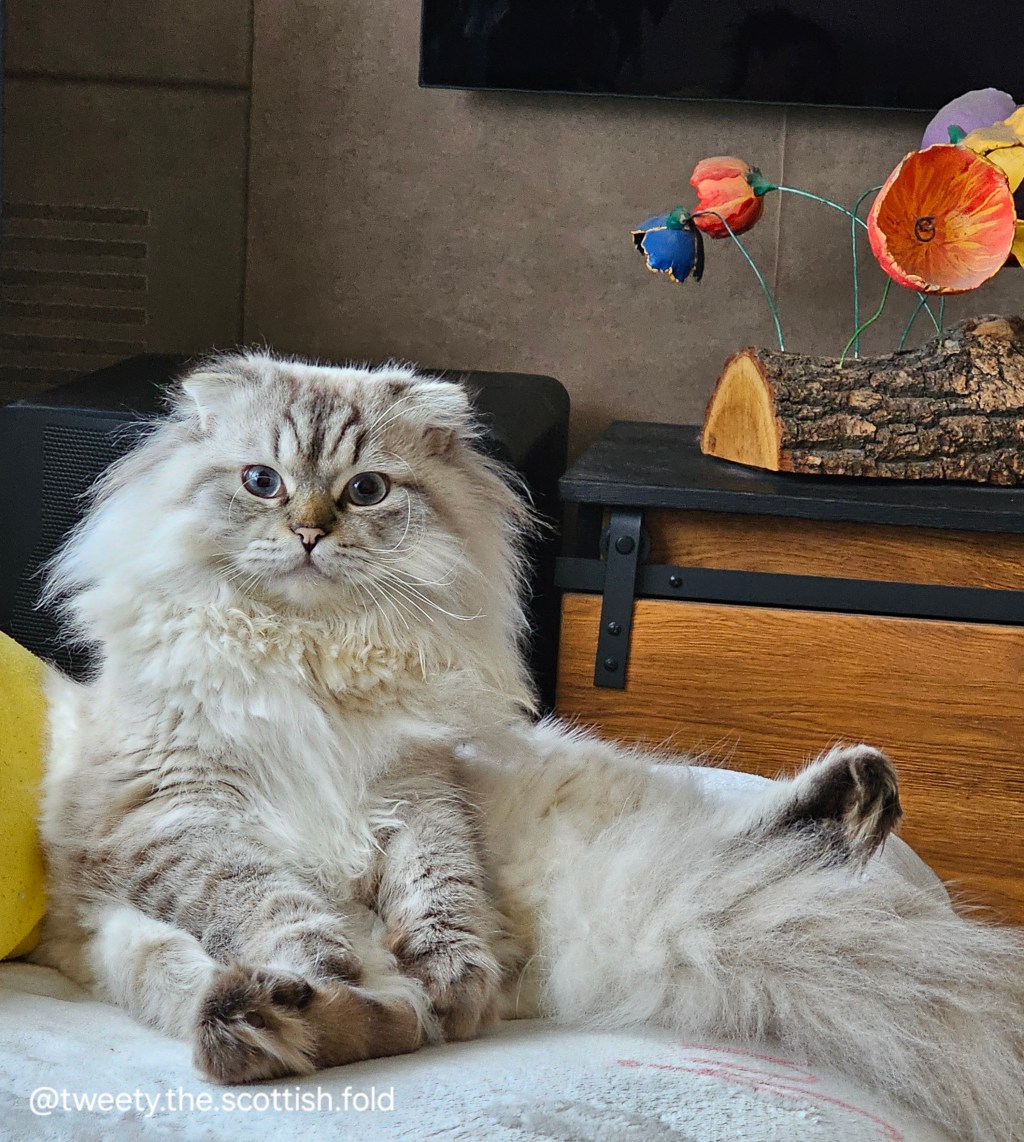
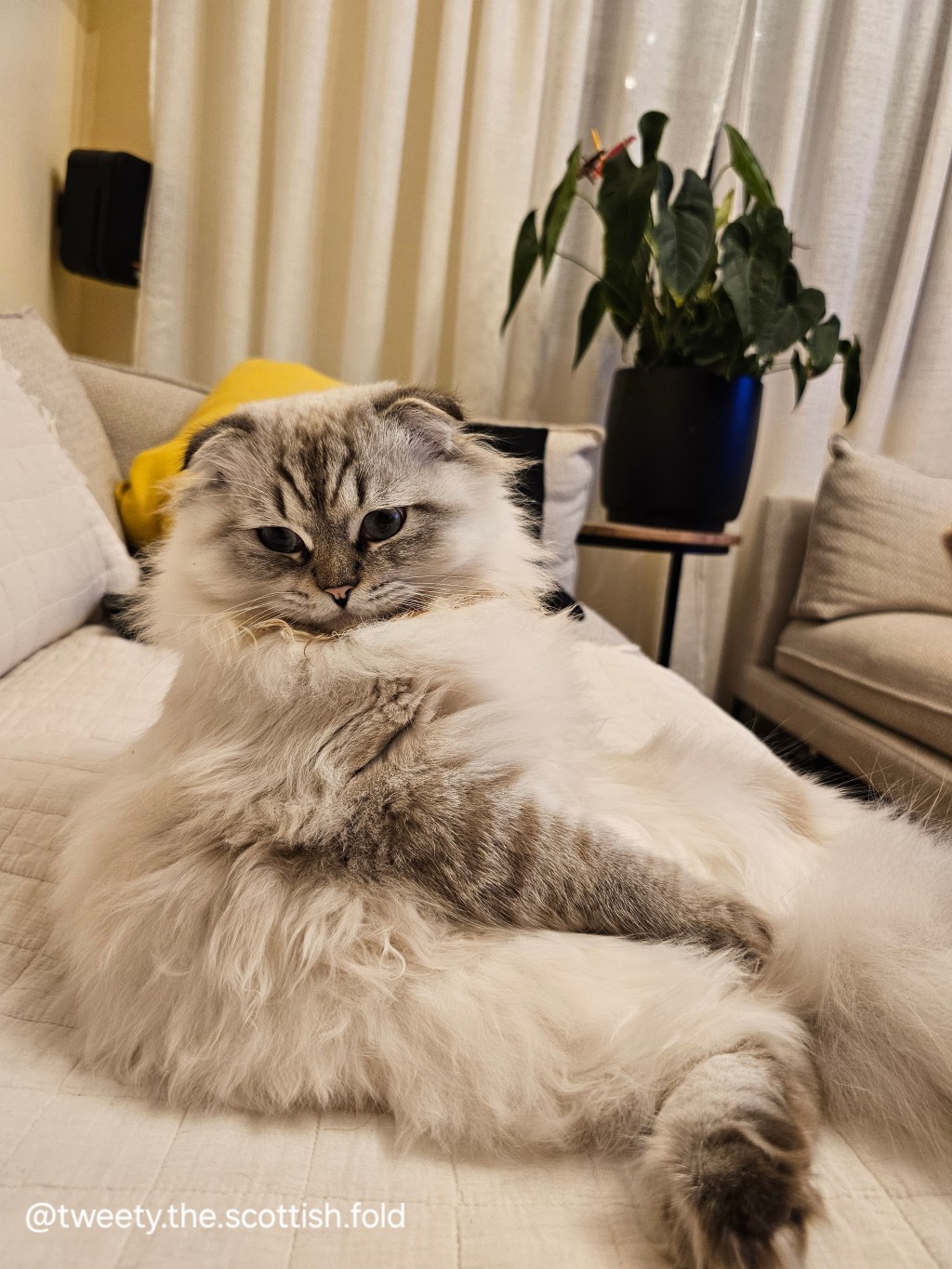
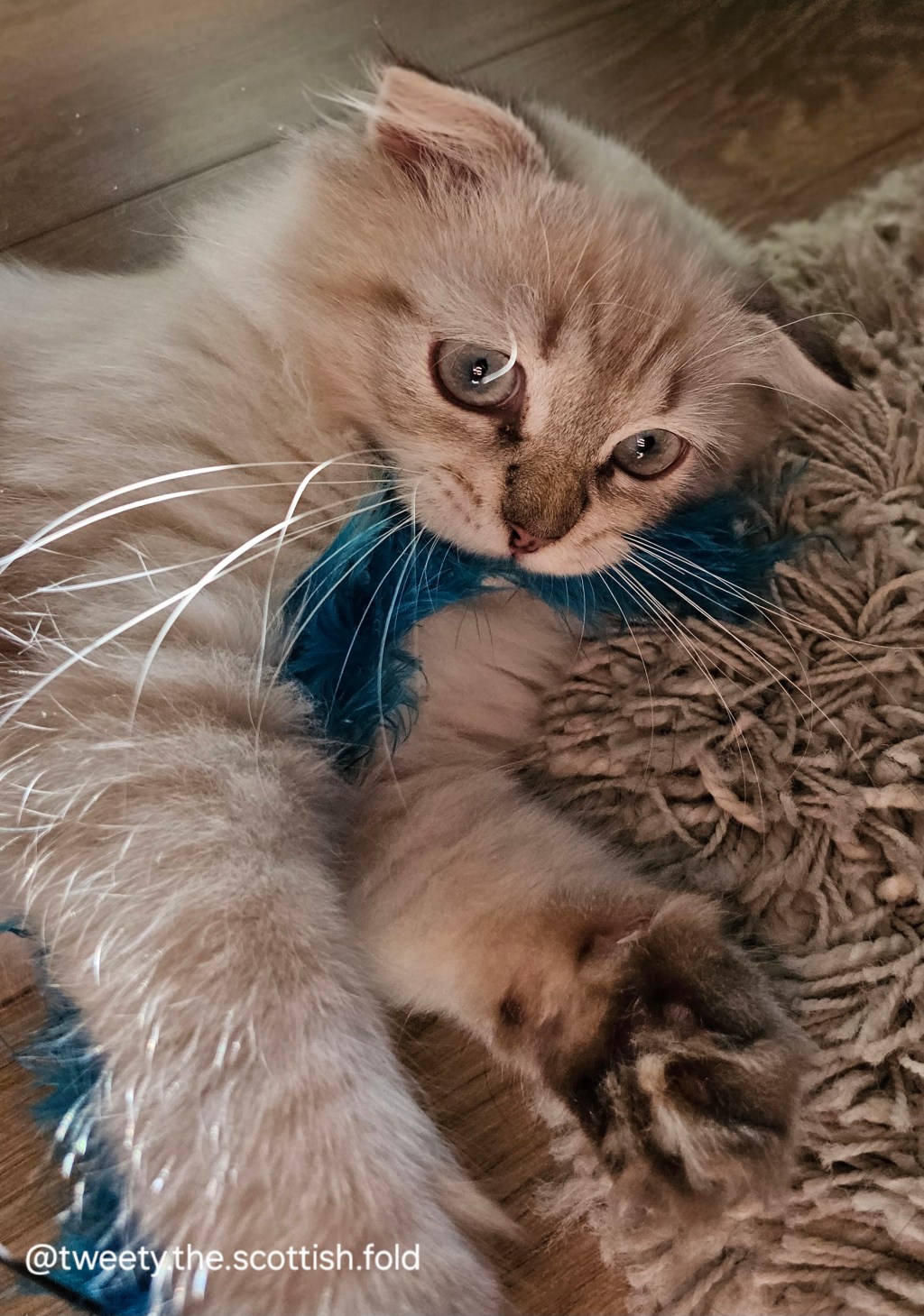
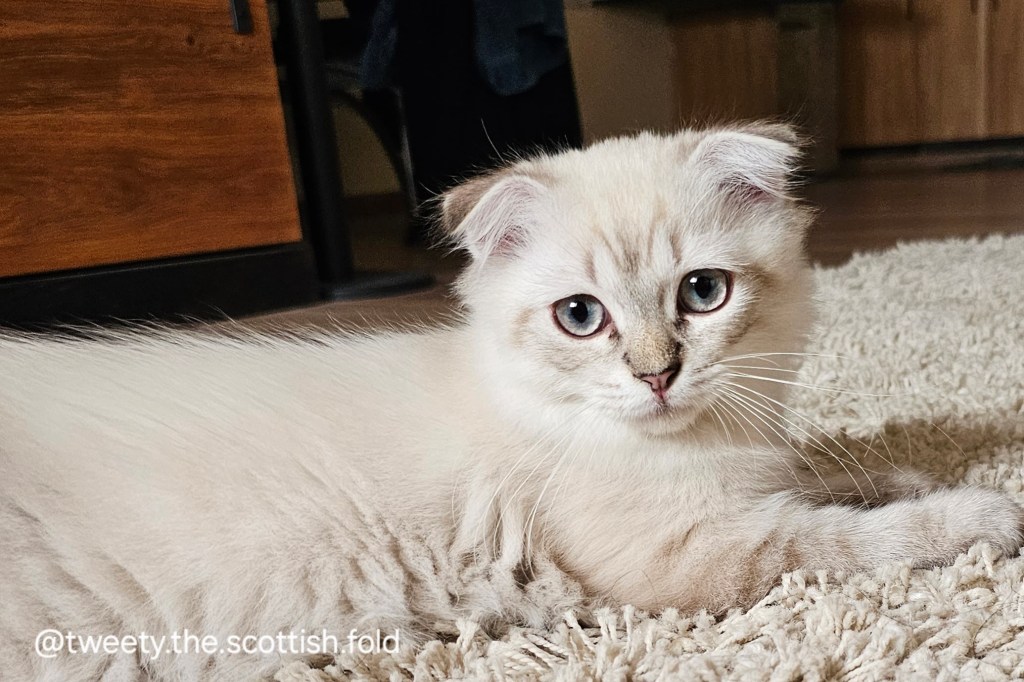
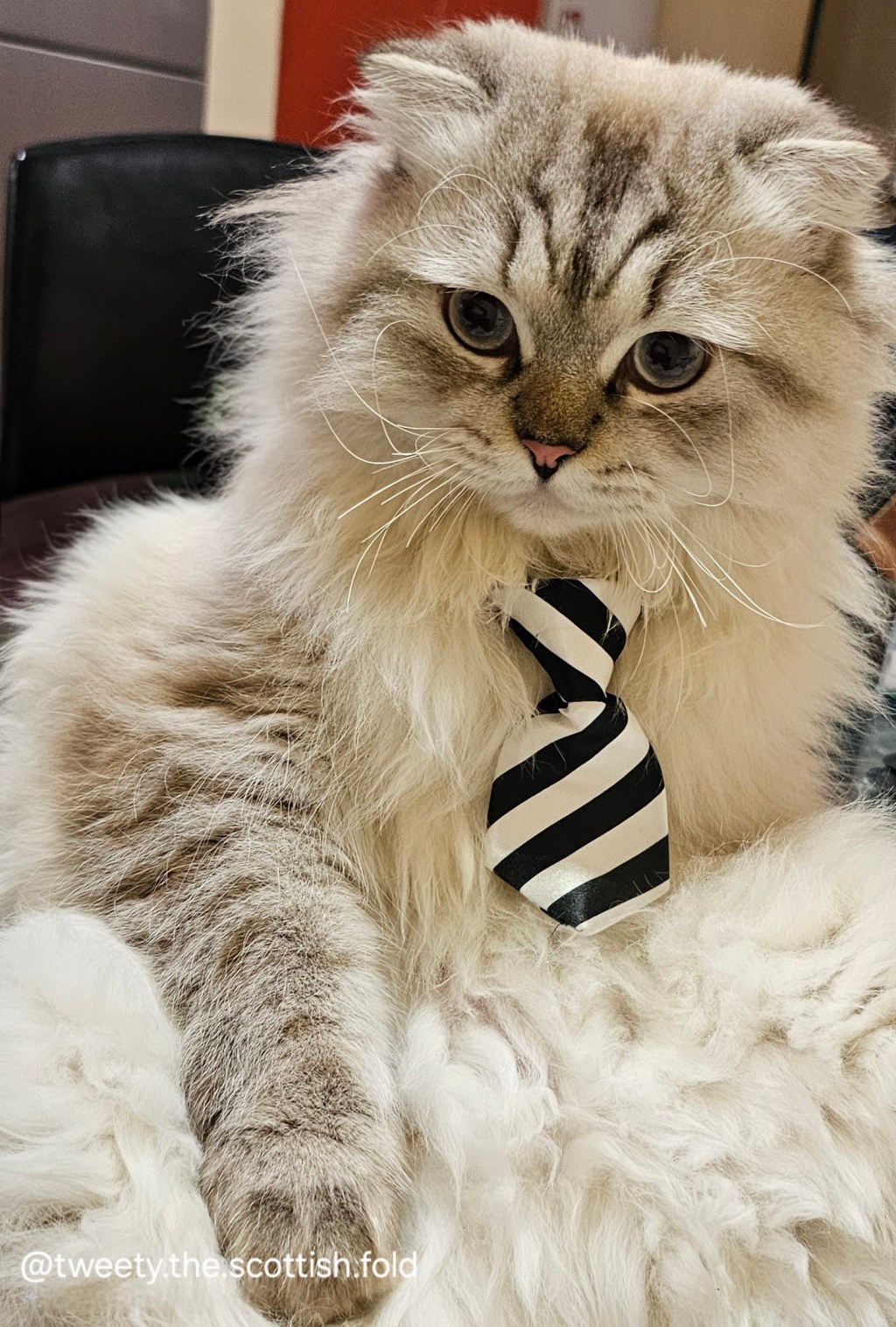
 Tweety the Scottish Fold - Scottish Fold Cats